
Estimated reading time: 4 minutes
By the time Day 2 started, everyone already had a sense that this course was different.
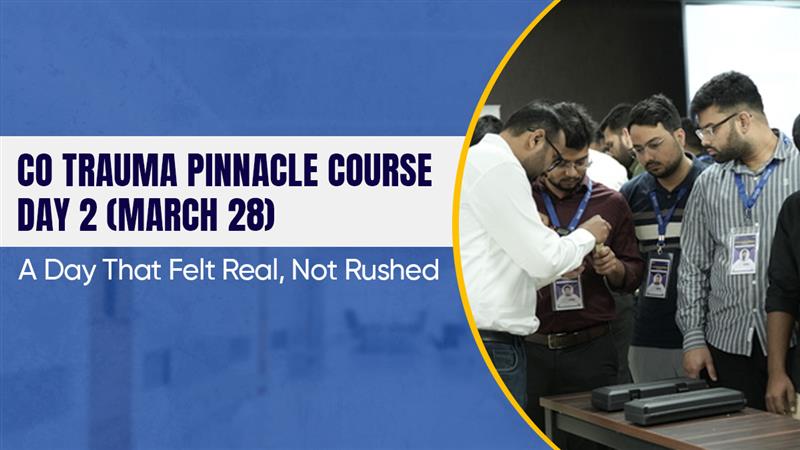
There was less hesitation, more questions, and a lot more involvement. People had settled in, and you could actually see the shift—from just attending… to really trying to understand and apply things.
The focus moved to lower limb trauma, and the day was packed—but it never felt overwhelming. It felt… useful.
Day 2 Highlights: What Was Actually Covered
A Quick Recap That Helped
The day began with a short recap of Day 1. Not just for revision, but to connect things.
It helped set the flow for what was coming next.
Proximal Femur: Finally Making Sense
This is one of those topics everyone studies—but not everyone feels confident about.
This session helped clear that gap:
- How to approach different fracture types
- What actually matters while deciding management
- Small clinical insights that make a big difference
It didn’t feel heavy—it felt clear.
DHS Practical: Where Things Clicked
The DHS (Dynamic Hip Screw) session was one of those moments where things started to come together.
Participants got to:
- Understand the steps properly
- See where mistakes usually happen
- Build some confidence with the technique
It wasn’t perfect for everyone—but it was a solid start.
Distal Femur: Less Confusion, More Clarity
A topic that usually feels complicated was explained in a very straightforward way.
- Fixation choices
- Planning the approach
- Thinking through real cases
People actually seemed more comfortable with it by the end.
Bridge Plating Practical: Understanding the “Why”
This wasn’t just about how to put a plate.
It was about:
- When to use bridge plating
- What you’re trying to achieve
- How to avoid doing it wrong
That “why” part made a difference.
Proximal Tibia: Practical Thinking
The session stayed focused on real-world approach:
- Planning before jumping into surgery
- Avoiding common errors
- Keeping outcomes in mind
It felt grounded, not textbook-heavy.
Medial Buttress Practical: Getting Hands-On
Another session where participants could actually try things out.
- Indications
- Stability concepts
- Technique basics
You could see people becoming more comfortable.
Ankle & Pilon: The Details That Matter
This part needed attention—and it got it.
- Injury patterns
- Reduction importance
- Treatment planning
It wasn’t rushed, which helped.
External Fixator Practical: One of the Most Engaging Parts
This was easily one of the most interactive sessions of the day.
- When to use it
- How to apply it
- What usually goes wrong
A lot of learning happened here without it feeling forced.
Case Discussions: Where Everything Came Together
The day ended with lower limb case discussions.
And honestly, this is where it all made sense.
Real cases. Real doubts. Real answers.
No pressure—just learning.
Why Day 2 Worked
It wasn’t just about covering more topics.
It was about:
- Making things clearer
- Letting people try
- Giving space to ask questions
That’s why it felt productive without being exhausting.
A Course That Actually Helped
By the end of Day 2, most participants weren’t talking about how much was covered.
They were talking about how much they understood. And that says a lot
What’s Next?
There’s definitely more coming. We’ll be bringing in more courses, more sessions, and more practical learning opportunities like this.
Till then, you can explore our upcoming courses and see what fits your schedule and needs.
About Conceptual Orthopedics
Conceptual Orthopedics has been building something that residents actually find useful.
Not just notes. Not just lectures.
But:
- Clear concepts
- Practical understanding
- Preparation that actually helps in exams like NEET SS
If you’re serious about improving both your clinical confidence and exam prep, it’s worth checking out.
Click here to know more about the upcoming courses: CO Signature Offline Program