
Estimated reading time: 7 minutes
Orthopedic residency is one of the most demanding yet rewarding journeys in medicine. Every resident enters the branch with excitement, but very quickly realizes that residency is much more than surgeries and textbooks. It is about responsibility, decision-making, patient care, teamwork, confidence, and gradual transformation.
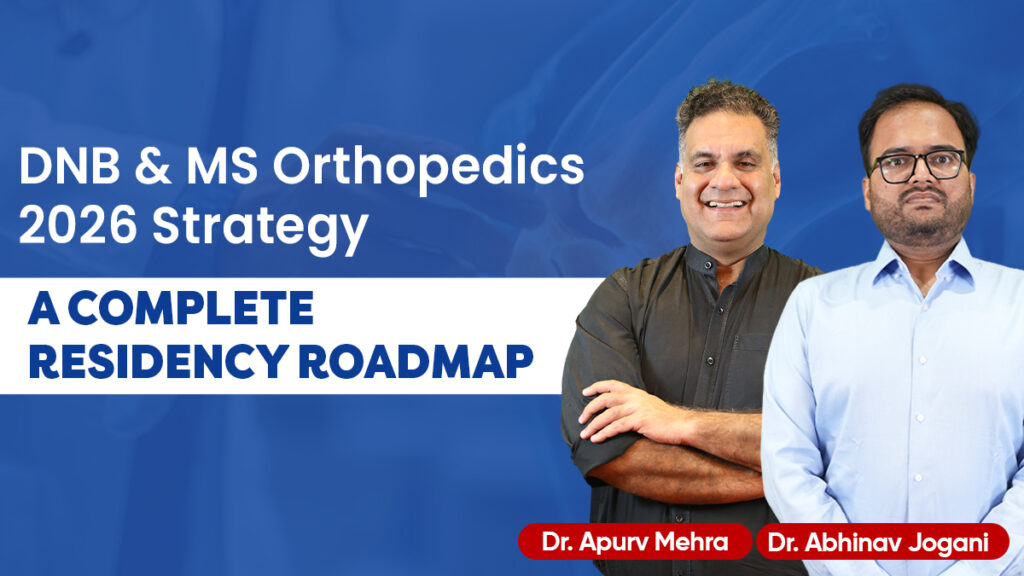
In a recent session by Dr. Apurv Mehra and Dr. Abhinav Jogani, the focus was not just on exam preparation, but on understanding what an orthopedic resident should truly learn during each year of residency — from JR1 to SR ship — and how structured guidance can make the journey smoother.
The Vision Behind Conceptual Orthopedics
Dr. Apurv Mehra shared how Conceptual Orthopedics started in 2019 with a very clear objective — to create a structured learning pathway for orthopedic residents.
The idea was simple:
- What should a first-year resident absolutely know?
- What skills should a second-year resident develop?
- What should a final-year resident master before exams and independent practice?
The platform was designed after discussions with senior orthopedic surgeons and educators who identified the “must-know” concepts and practical skills for every stage of residency.
According to Dr. Apurv Mehra, the challenge today is no longer the lack of resources. The real challenge is the overwhelming amount of content available everywhere. Residents often struggle to decide what exactly they should focus on.
That is where structured mentorship becomes important.
JR1: The Survival Phase
The first year of orthopedic residency can feel chaotic.
Within days of joining, residents are overloaded with ward duties, dressings, slabs, plasters, emergency calls, OPD work, and operation theatre postings. Most residents enter with fear and uncertainty.
As Dr. Abhinav Jogani explained, many first-year residents feel lost:
- Fracture classifications sound confusing
- OPD interactions feel intimidating
- OT exposure is limited
- No one really teaches how to navigate residency
And yet, this phase builds the foundation of everything that follows.
Watch the video: DNB & MS Orthopedics 2026 Strategy | By Dr. Apurv Mehra & Dr. Abhinav Jogani
What Should a JR1 Focus On?
1. Anatomy and Basic Sciences
A first-year resident must build strong basics:
- Bone anatomy
- Nerve anatomy
- Articular cartilage
- Muscle structures
- Upper and lower limb anatomy
Without understanding anatomy properly, clinical examination and surgery become difficult later.
2. Ward Work
Residents should become comfortable with:
- Dressings
- Bandaging techniques
- Pressure sore care
- Catheter care
- Basic patient handling
These may appear small tasks initially, but they shape clinical judgment and discipline.
3. OPD Learning
The expectation from a JR1 is not advanced diagnosis.
Instead, residents should:
- Learn basic clinical examination
- Understand normal vs abnormal findings
- Read basic X-rays
- Communicate with patients confidently
Simple examinations like:
- Thomas test
- Trendelenburg test
- Basic hip examination
become extremely important during this stage.
4. OT Exposure
The operation theatre is where orthopedic learning truly begins.
A JR1 should focus on:
- Proper scrubbing technique
- Wearing gloves and gowns correctly
- Painting and draping
- Understanding OT workflow
- Learning basic wire handling
As he mentioned, even learning how to place a K-wire properly is an important milestone during first year.
JR2: The Skill-Building Phase
Second year is where residency starts becoming more meaningful.
Residents are no longer expected to simply survive ward work. They are expected to think independently, supervise juniors, present cases confidently, and gradually build surgical skills.
Dr. Abhinav described JR2 as the phase where responsibility truly begins.
What Changes in JR2?
Clinical Thinking Improves
A second-year resident should not only identify a problem but also develop an approach toward management.
For example:
- Understanding the approach to a limping child
- Differentiating Perthes disease from DDH
- Planning fracture management logically
Trauma Principles Become Important
This is the phase where residents must understand:
- Principles of fixation
- Locking vs non-locking screws
- Lag screws
- Neutralization plating
- Bone grafting techniques
The focus shifts from “doing surgery” to understanding why a particular method is chosen.
Ward Presentations Become Structured
Presenting to seniors is no longer about reading symptoms.
Residents should:
- Present diagnosis logically
- Explain fracture classifications
- Discuss implant choices
- Outline management plans clearly
Thesis Work Begins
The thesis often becomes a major source of stress during second year.
Questions regarding:
- Sample size
- Literature review
- Methodology
- Data interpretation
can become overwhelming without guidance.
The Importance of Follow-Up Learning
One of the most important points highlighted by Dr. Apurv Mehra was the value of patient follow-ups.
He emphasized that residents often think surgical exposure alone makes them better surgeons.
But in reality:
“You learn more from follow-ups than from the surgery itself.”
Following patients after surgery teaches:
- Complication recognition
- Functional outcomes
- Rehabilitation understanding
- Surgical decision-making
This is where true clinical maturity develops.
JR3: The Exam and Mastery Phase
Final year residency is intense.
There is pressure from:
- Theory exams
- Practical exams
- Case presentations
- Viva preparation
- Surgical expectations
At this stage, residents often have:
- Senior notes
- Textbooks
- Previous year papers
- PDFs
- Coaching material
But according to Dr. Abhinav, the biggest problem is not lack of preparation.
It is scattered preparation.
What Should a JR3 Focus On?
1. Advanced Understanding
A JR3 should understand:
- Hip biomechanics
- Tribology
- Arthroplasty concepts
- Wear mechanisms
- Implant choices
The learning becomes more analytical and concept-driven.
2. Exam-Oriented Preparation
Residents should:
- Practice answer writing
- Learn structured presentation
- Focus on recall
- Prepare quick revision notes
- Improve diagram presentation
3. Viva and Case Discussions
Practical exams require:
- Confident communication
- Proper examination sequence
- Logical case presentation
- Radiology interpretation
The platform also includes extensive case discussions covering:
- AVN hip
- Osteomyelitis
- TB knee
- Arthroplasty cases
- Tumor discussions
SRship: Learning Never Stops
Passing MS or DNB exams is not the end of learning.
Senior residency becomes the phase of:
- Refinement
- Filling knowledge gaps
- Learning newer technologies
- Exploring subspecialties
This includes exposure to:
- Arthroscopy
- Oncology
- Spine surgery
- Robotics
- Navigation-assisted surgery
- Evidence-based medicine
Residents also begin preparing for:
- FNB
- FRCS
- DNB-SS
The learning simply evolves to a higher level.
AI in Orthopedics: The Next Big Step
A major highlight of the session was the upcoming AI in Orthopedics lecture series by Dr. Abhinav Jogani.
The aim is not to replace surgeons with technology.
Instead, the goal is to help residents:
- Save time
- Improve efficiency
- Reduce repetitive workload
- Focus more on patient care and surgical learning
The six-lecture series will explore how artificial intelligence can practically help orthopedic residents during daily clinical work.
Thoughts
Orthopedic residency is not about becoming perfect overnight.
It is about gradual transformation.
No resident enters the branch knowing everything. Growth happens slowly — through ward work, follow-ups, OT exposure, mistakes, discussions, mentorship, and repetition.
What matters most is consistency, openness to learning, and the willingness to improve every single day.
As both speakers emphasized throughout the session, residency becomes easier when guidance is structured and learning is focused.
And perhaps that is the biggest message for every orthopedic resident preparing for MS or DNB Orthopedics 2026:
You do not need to know everything at once. You just need to keep evolving.