
Estimated reading time: 4 minutes
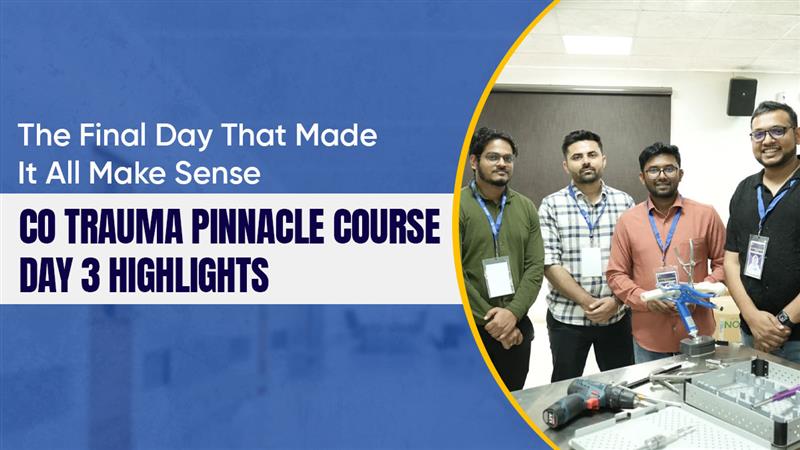
By the third day, something had clearly changed. Attendees were more relaxed, more involved, and honestly, more curious. The hesitation from Day 1 was gone. Instead of just listening, participants were thinking, questioning, and trying to connect everything they had learned over the last two days.
And the focus of the final day was exactly what most residents actually need—but don’t always get enough of: complications, mistakes, and real-life problem solving.
Day 3 Highlights: What Was Covered
A Short Recap That Helped Connect Things
The day began with a quick recap of Day 2.
At this point, it didn’t feel like revision. It felt like putting pieces together before moving into slightly tougher areas.
Non-Union: Talking About What Doesn’t Heal Easily
This session got everyone’s attention.
Non-union is something most people find difficult—not just to study, but to manage in real life.
The discussion stayed practical:
- Why union fails
- How to approach these cases step by step
- What actually works when you’re dealing with it
It wasn’t simplified too much, and that helped.
Fracture-Related Infection: No Avoiding This Topic
This is one area people usually feel unsure about.
Instead of making it complicated, the session focused on:
- How to recognise infection early
- What steps to take
- Where things usually go wrong
It felt honest and useful.
Periprosthetic Fractures: Less Fear, More Clarity
A topic that sounds intimidating—but was explained in a way that made it easier to approach.
- Understanding the situation
- Planning management
- Handling tricky cases
By the end, it didn’t feel as overwhelming as it usually does.
Suprapatellar Nailing Demo: Seeing It Makes a Difference
This was one of the most engaging parts of the day.
Watching the procedure helped participants:
- Understand the steps clearly
- Visualise positioning and technique
- Connect theory with practice
Sometimes, one good demo clears more doubts than hours of reading.
What Went Wrong? / Implantology: The Most Honest Session
This session stood out for a reason.
Instead of only showing ideal cases, it focused on:
- Mistakes that actually happen
- Why things fail
- How to avoid repeating them
It felt real. And that’s why people connected with it.
Closing & Feedback
The course ended with closing remarks and feedback.
By then, most people had the same feeling—it was worth attending.
Not because it covered everything, but because it made things clearer.
Why Day 3 Mattered?
The first two days built the base.
Day 3 made it practical.
- It talked about complications
- It accepted that mistakes happen
- It showed how to deal with them
That shift in thinking is what made the difference.
A Good Ending to a Well-Planned Course
With this, the CO Trauma Pinnacle Course came to an end.
Across all three days, one thing stayed consistent—this course was built around what residents actually need.
Not just theory. Not just slides.
But understanding that stays with you.
What’s Next?
More sessions like this are definitely coming.
Workshops, courses, and focused learning experiences are already in the pipeline.
Till then, you can explore our upcoming courses and stay connected—so you don’t miss out the next time.
About Conceptual Orthopedics
Conceptual Orthopedics has been building a platform that focuses on clarity.
- Concepts that make sense
- Learning that helps in real cases
- Preparation that supports exams like NEET SS, DNB, PEDCET and more
If you’re trying to get better at what you do—not just pass exams—it’s worth looking into.
Final Thought:
By the end of Day 3, it felt like something meaningful had been completed—not just another course.
The three days were well-structured, practical, and focused on what actually matters in real cases. More than just knowledge, it gave participants better clarity and confidence.
A successful course overall, with more such sessions expected ahead. Stay connected and explore upcoming courses so you don’t miss out next time.